


Filing Illinois Crash Reports and What It Means for Insurance and Health
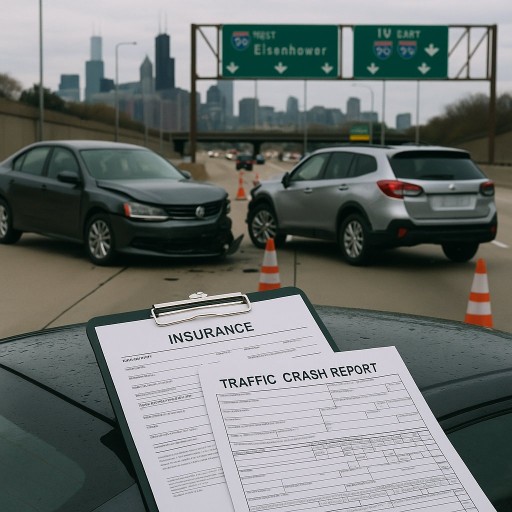
A recent summary from the Illinois State Police about crash reports highlights rules every Chicago driver and car accident victim should know. It explains when drivers must file a crash report, how to file if an officer doesn’t come to the scene, and special rules for freeway and hit-and-run incidents. These administrative details connect directly to car accident law, insurance claims, and the health and recovery of affected individuals and community members. Knowing the reporting requirements, timelines, and available resources can protect your legal rights, support insurance claims for medical bills and lost wages, and help you monitor health risks after a collision.
When do I have to file a crash report in Illinois?
The Illinois State Police rules are specific. But you must file a crash report if the crash resulted in a death, bodily injury, or property damage above a certain dollar threshold. If all drivers are insured, that threshold is $1,500. If any driver involved is uninsured, the threshold lowers to $500. And failing to file when required can complicate insurance claims and legal actions by leaving no formal record of the crash.
What should I do if a police officer doesn’t appear at the scene?
Unfortunately, if no police officer comes to the scene, you must file a report with the Illinois State Police (ISP) as soon as possible and within 10 days. The ISP allows some crashes to be reported online — but only under narrow conditions: the crash must be a single-vehicle, property-damage-only incident, with no injuries, and it must have happened on an Interstate or a U.S. or Illinois Route. The ISP also provides a tutorial to guide motorists through the online report process.
How do desk reports in Chicagoland work and why do they matter?
For crashes on freeways in the Chicagoland area, motorists can file a Desk Report in person (generally within 10 days of the crash). Troopers can take Desk Reports at specified local police departments Monday through Friday 10:00 AM to 2:00 PM and 7:00 PM to 3:00 AM, and anytime on Saturdays and Sundays. When you arrive at a listed location, call (847) 294-4400 so a Trooper can be dispatched. You can also file at ISP Troop 3 Des Plaines Headquarters located at 9511 West Harrison Street, Des Plaines, IL 60016. Here’s why: Desk Reports document hit-and-run crashes, collect witness statements, and create an official record that insurers and attorneys can use.
How does a crash report affect my insurance claim and legal rights?
Crash reports serve as formal evidence for insurance claims and legal cases. Ever wonder why insurers need that official report? They often use it to establish the basic facts of the collision, identify involved parties, and note whether the crash involved injury or significant property damage. For car accident victims, a properly filed report supports claims for medical bills, lost wages, and pain and suffering. If an at-fault driver lacks sufficient coverage, UM/UIM insurance (uninsured/underinsured motorist coverage) can come into play — it helps protect an injured driver when the other driver’s insurance is missing or inadequate.
So, remember that Illinois uses a modified comparative negligence system when assigning fault. This means an injured party’s compensation is reduced by their percentage of fault, and under Illinois law a person cannot recover damages if they are more than 50% at fault for the crash. So, any written record, photos, witness names, and the crash report itself can help reduce disputes about who was responsible.
When should car accident victims seek medical testing and health monitoring?
Seek medical attention immediately after a crash if you have any complaints of pain, dizziness, bleeding, or confusion. Unfortunately, some injuries—such as concussions, internal bleeding, or soft tissue damage—may not show clear symptoms right away. Follow these guidelines:
- Get emergency care for life-threatening signs (severe bleeding, loss of consciousness, difficulty breathing).
- See a medical provider within 24–72 hours for any pain, headache, numbness, or unusual symptoms.
- Ask about imaging (X-ray, CT scan, MRI) if you have neck, back, or head trauma; some injuries require early detection to avoid long-term harm.
- Follow concussion protocols if you hit your head — cognitive and physical rest and follow-up evaluations are important.
- Keep records of all medical visits, tests, prescriptions, and missed work to document medical bills and lost wages for insurance claims.
Thankfully, as of 2025, Illinois car accident laws and insurance regulations still require timely crash reporting to preserve insurance claims and legal rights, and medical documentation remains a key part of proving damages.
What should I do after a hit-and-run crash?
The ISP guidance is clear: do not try to follow the offending vehicle. Instead, collect as much information as possible — vehicle description, license plate number, direction of travel, and witness contact information — then report the incident immediately. Hit-and-run crashes can be taken as a Desk Report in Chicagoland. An official report helps law enforcement locate the other driver and supports an uninsured motorist claim if the at-fault driver is never found.
What resources are available for affected individuals and community members?
Here are some useful resources:
- Illinois State Police Crash Reports page for filing instructions and online reporting tools.
- ISP Troop 3 Des Plaines Headquarters for in-person desk reports (9511 West Harrison Street, Des Plaines, IL 60016) and the contact number (847) 294-4400.
- Your auto insurance carrier for claim reporting and guidance on UM/UIM coverage.
- Illinois Department of Insurance for help with disputed claims or coverage questions.
- Local medical providers and the Illinois Department of Public Health for post-crash health guidance and follow-up care.
- Experienced personal injury attorneys who represent car accident victims and can explain comparative negligence, the statute of limitations, and how to preserve evidence and pursue compensation.
What is the statute of limitations and why does it matter?
The statute of limitations is the legal deadline to file a lawsuit. In Illinois, the statute of limitations for most car accident injury claims is two years from the date of the injury (with a similar two-year period from the date of death for a wrongful death claim). And miss that deadline and you may lose the right to sue for medical bills, lost wages, and pain and suffering. Preserve evidence and consult an attorney early so you don’t inadvertently waive important legal rights.
Practical steps to protect yourself and your family after a crash
Follow these actions at the scene and after the incident:
- Check for injuries and call 911 if anyone needs emergency care.
- If safe, move vehicles out of traffic and turn on hazard lights.
- Exchange driver’s license, vehicle registration, proof of liability insurance, and contact phone numbers. Be prepared to provide callback numbers for any party not present for a follow-up investigation by a Trooper.
- Take clear photos of vehicle damage, license plates, the scene, road conditions, and any visible injuries.
- Collect witness names and phone numbers.
- If no officer responds, file an ISP crash report within 10 days; use online reporting only for single-vehicle, property-damage-only crashes on qualifying highways. For freeway crashes in Chicagoland, consider filing a Desk Report as described above.
- Notify your insurer promptly, but be cautious about making recorded statements before you understand the full extent of injuries or liability.
- Seek medical care and follow-up testing as recommended. Keep all treatment records and bills.
- Consider consulting an attorney to protect your rights, especially if you have significant injuries, lost wages, or complicated liability issues.
Final thoughts for Chicago drivers and car accident victims
Crash reporting rules might sound bureaucratic, but they’re central to protecting your legal and insurance rights, and they help community members get the medical and economic support they need after a collision. Properly documenting the crash, seeking timely medical care, and understanding UM/UIM coverage, comparative negligence, and the statute of limitations are all critical steps for injured drivers and affected individuals. If you’re unsure about how to proceed after a crash, contact local authorities, your insurer, and a qualified attorney who understands Illinois traffic law and can guide you through the process.
For official filing instructions and tutorials, visit the Illinois State Police Crash Reports page.